I moved to Bonn in 1986. Shortly after that, I met Helmut Thillmann at a seminar. He organised the early-morning sports and showed us how relaxed he could run fast and long when we went jogging.
What he didn’t tell us is that on 29 January 1986 he, together with Karl Lennartz, Axel Bosse, Hansjürgen Melzer, Thomas Greiser and Wolf-Dirk von Berchem, founded the ‘Marathon Bonn e.V. (source: GA from 5.4.2016). A significant amount of time was needed for the planning and organisation. Three years later – marking Bonn’s 2000th anniversary – the first marathon took place on 10 June 1989 in the former capital.
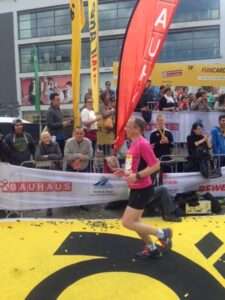 Closing streets for a marathon was new for Bonn. The administration provided arguments against, such as, ‘The runners should stop at red lights’ (Source: GA from 11.06.2024) Despite this, a date in summer was chosen because it is traditionally a marathon-poor time. In addition, in the 1980s, shops closed at 2 p.m. on Saturdays, and most employees had the day off.
At the first marathon in Bonn, 2,443 runners finished, including 156 women. The time limit was five hours. It is hard to imagine today that 375 men and 10 women broke the magical three-hour mark. 1969 athletes completed the course in a time of under four hours. (Source: ibid.), On 5 June 1993, after the fifth marathon, the sponsor withdrew. The quote from back then: ‘For that money, we could get a season’s advertising deal with 1. FC Köln.’ (Source: ibid.)
It was not until 2001 that the marathon was permanently reinstated. Since 2005, the half marathon has also been offered. In 2005, I started running as a former judoka. The beginning was difficult – and it took until the summer of 2006 for me to complete the so-called small bridge 10 km lap (Kennedy and South Bridge) for the first time. That’s when a raffle was held by my employer: up to 25 starting places including preparation training. What could possibly go wrong? At worst, I win!
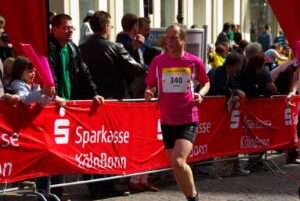 What I didn’t realise was that everyone who entered would win! Experience shows that only a few people stick to their training schedule from the beginning until the race in April. In addition to the twice-weekly training sessions starting at the company gate, there are Sunday runs starting at Kloster Heisterbach. And Helmut Tillmann is also one of the trainers!
In Janaury 2007 the storm Kyril hit during the running training phase. Hence the 28 km Sunday run took a lot longer than usual due to the many detours needed. Comment from the trainer: I’ll register everyone who is still registered for the half marathon for the marathon.
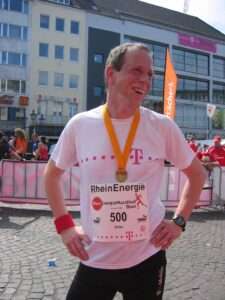 And so, without ever having participated in a half marathon, I ran my first marathon on 22 April 2007. For the last time, the route also went through Godesberg, Rüngsdorf, Friesdorf, Poppelsdorf, past the Sportpark Nord to Josefshöhe and then to the market square.
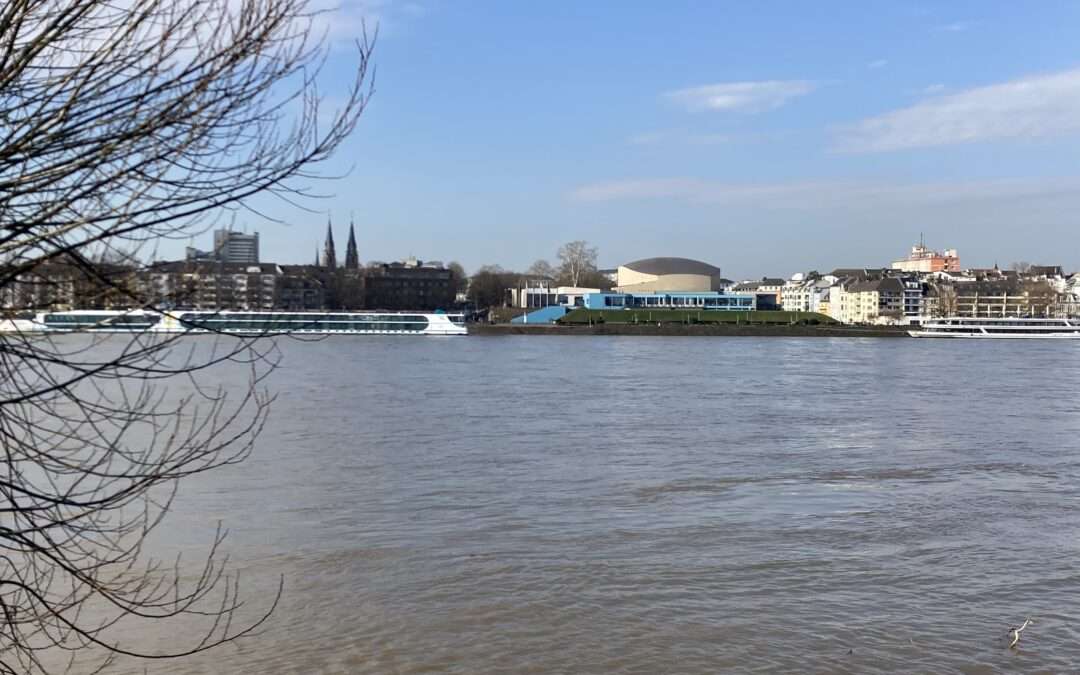
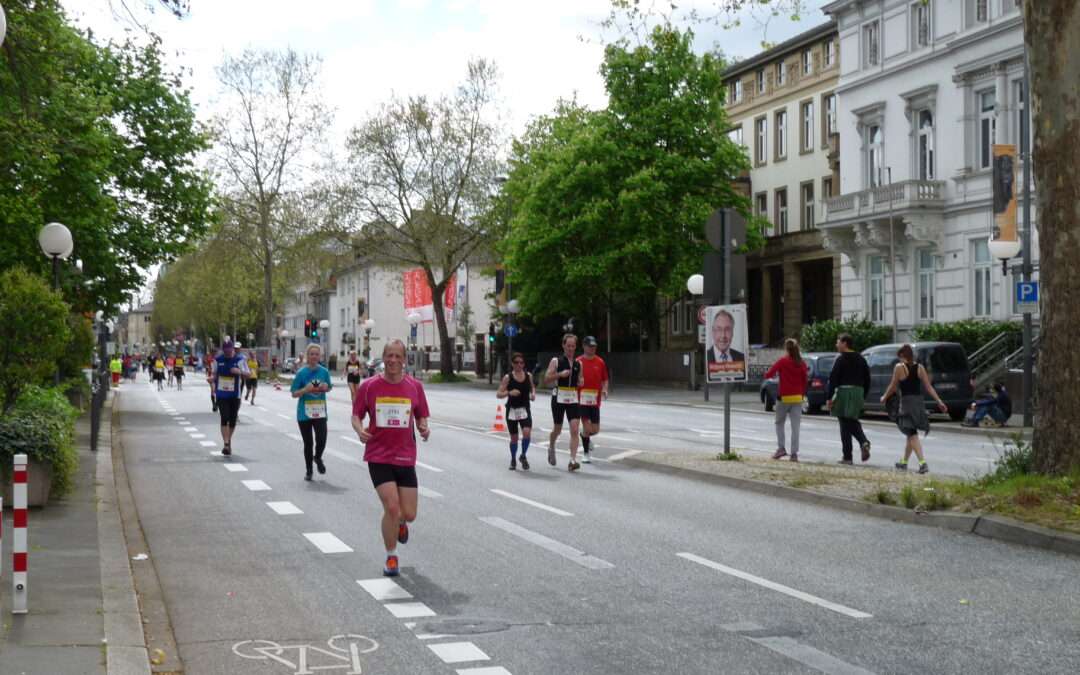
Today, the marathon course is twice the half marathon distance: starting near the opera house, over the Kennedybrücke and then south to the Südbrücke and parallel to the Rhine back towards the Kennedybrücke. A samba band plays at the bridge ramp to support the runners and pick up the pace. A large loop around the Beethovenhalle and then along the Rhine promenade (where the Bonn Rowing Club provides the runners with Kölsch beer) to the Rheinaue and on to the Caesar Research Institute.
In the past, the marathon runners continued straight ahead here, but today all runners turn here and run along Konrad-Adenauer-Allee to the Hofgarten. This route is often almost without spectators. From the Hofgarten, the route continues via Münsterplatz and Bottlerplatz to the market square, where the finish is.
 For the last two kilometres, the spectators carry you to the finish (or into the second round). There is a great atmosphere on both sides of the running track.
While the number of registrations for the marathon remains stable, the number of registrations for the half marathon continues to rise. In 2025, 10,000 runners will start in the half marathon.
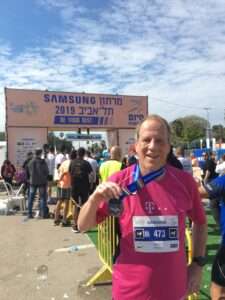
After running the marathon in Bonn several times, as well as in Istanbul, Florence, Nice to Cannes and on Lake Garda, I completed my 15th marathon in Tel Aviv in 2019.
Due to Corona, there was a longer break from running – and without a goal, I also drastically reduced my training. Now I am registered again for the half marathon in Bonn in 2025.
If you want more detailed information about the running track and the individual competitions (also for inline skaters, handbikers or relays), follow the link to the organiser: Deutsche Post Marathon Bonn


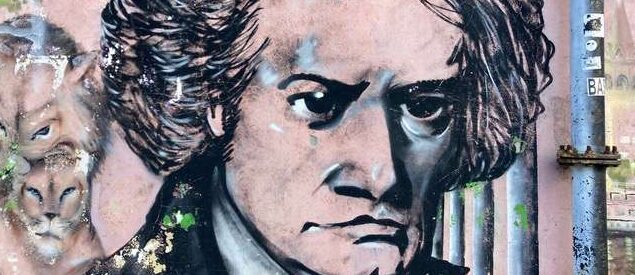
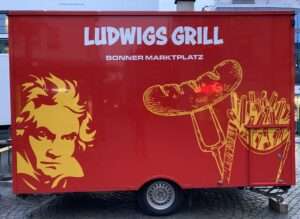
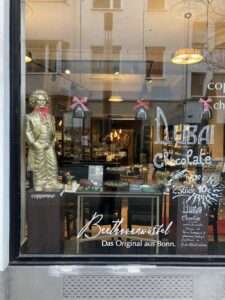
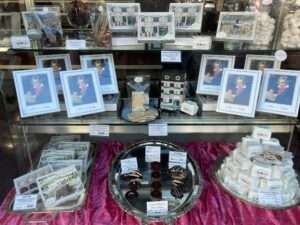
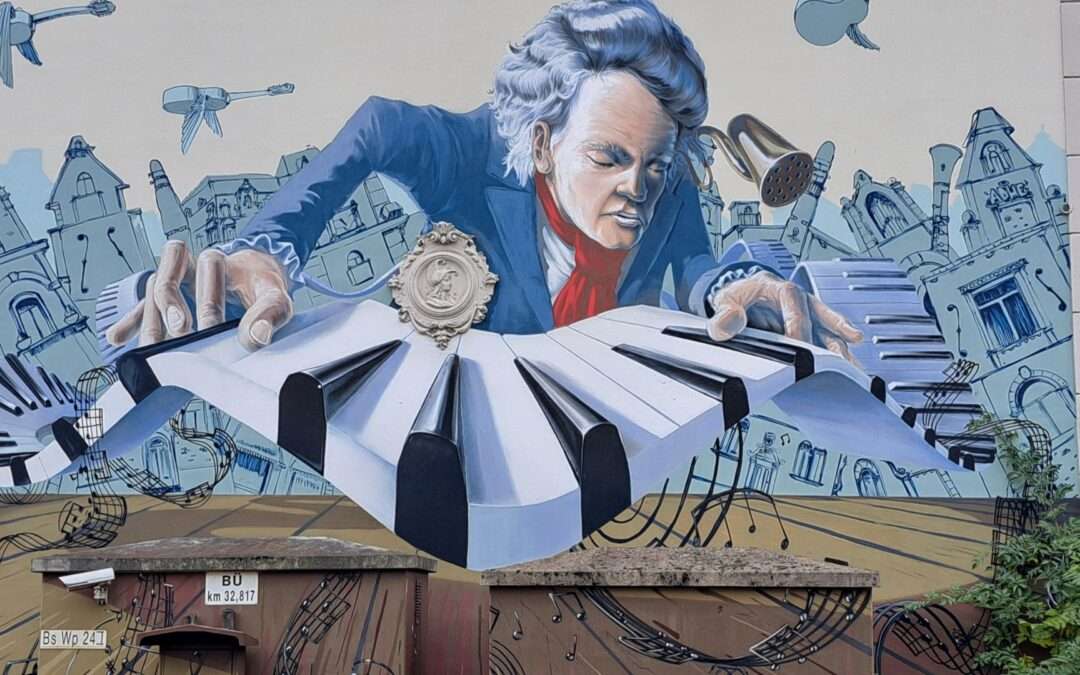
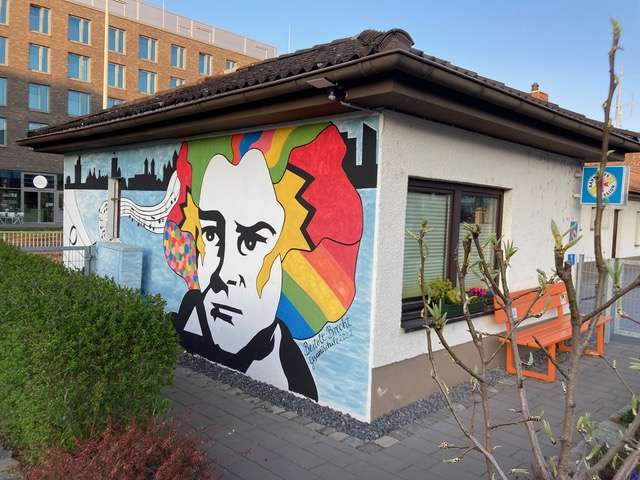
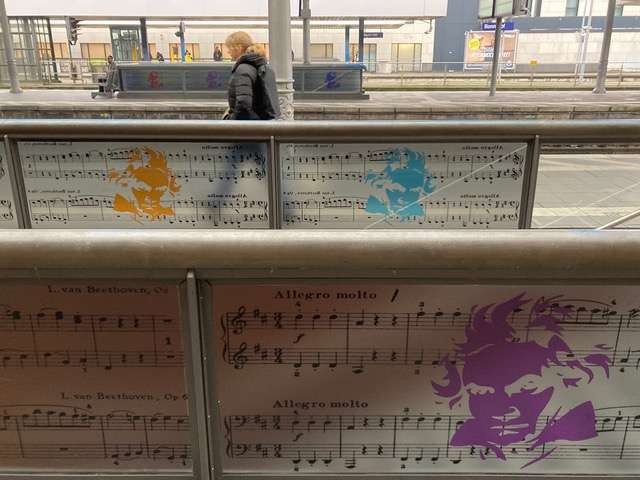
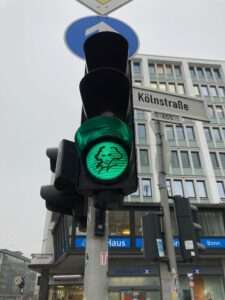
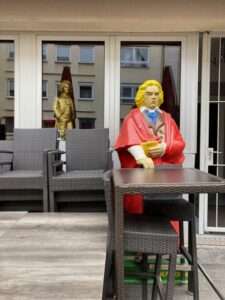
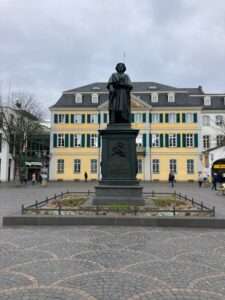
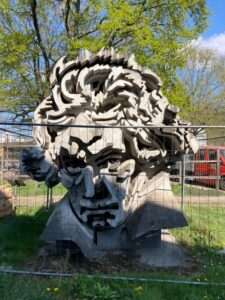
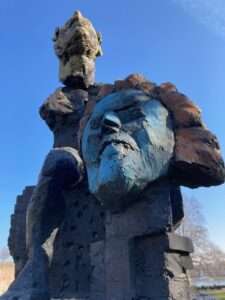 Further Beethoven artworks can be found in the Rheinaue or in the Stadtgarten. Here, Markus Lüpertz has depicted Beethoven as a sick man.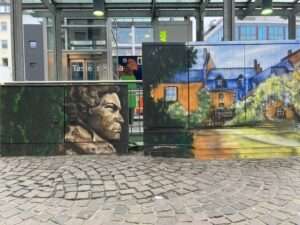
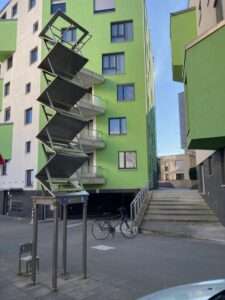 first glance: sculptor Yukako Ando has erected a desk in Rheingasse (the place where Beethoven was rescued from the second floor during the highest flood ever recorded in 1784) whose work surface rises like an accordion and merges into an open window. From this window, Beethoven had a view of the Rhine, the Beuel side, and the Siebengebirge mountains. A bird sits as a symbol of freedom.
 In front of the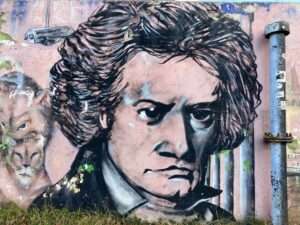
Recent Comments