by Stefan Heinze | Feb, 2026 | EN, famous people from Bonn, history, Music
Beethoven was born in Bonn in 1770 and lived and composed there until 1792. Beethoven’s first printed composition appeared as early as 1782. That is why Bonn is also known as Beethoven City. This blog aims to show that Beethoven can be experienced in Bonn with different senses.
Smelling
In the past, you could at least smell Beethoven—or rather his sheet music—in the archives of the Beethoven House (Das Beethoven-Haus. | Federal City of Bonn). This pleasure has fallen victim to digitization.
After it became known that Beethoven had severe bad breath, Beethoven perfume (L.V.BEETHOVEN Power For Men 100ml – Eau de Parfum: Buy Online at Best Price in KSA – Souq is now Amazon.sa: Beauty) was also taken off the market.
All that remains is the tip about how Beethoven smelled his food (soup, coffee) to check the taste. Swiss television has provided instructions: 250 years of Ludwig van Beethoven – He liked his soup best with 10 eggs – Radio SRF 1 – SRF
Tasting 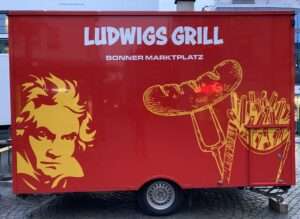
Beethoven is not only used in advertising at Ludwigsgrill. The name is also used at Restaurant Ludwig (Bonner Bogen) and Bar Ludwig (Südstadt). Beethoven’s Bar can be found at Motel One, his opera “Fidelio” is sometimes performed at the opera house, and the opera restaurant of the same name is opening more frequently.
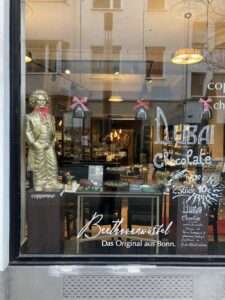
Beethoven cubes (pralinés) can be purchased at the Coppeneur chocolatier on Friedrichstraße.
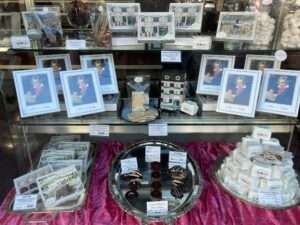
Café Kleimann on Rheingasse also offers special Beethoven delicacies—as well as other Bonn celebrities.
by Stefan Heinze | Feb, 2026 | famous people from Bonn, Music, Uncategorized
Beethoven was born in Bonn in 1770 and lived and composed there until 1792. Beethoven’s first printed composition appeared as early as 1782. That is why Bonn is also known as Beethoven City. This blog aims to show that Beethoven can be experienced in Bonn with different senses.
Seeing
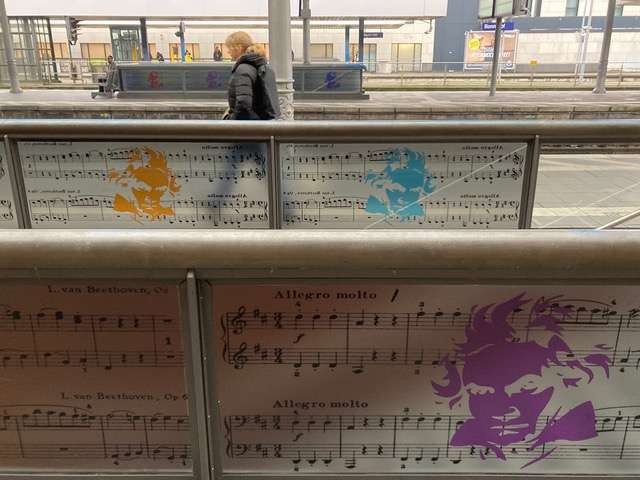
If you arrive by train, the first references to Beethoven can be found on the banisters and doors of the main station building, as well as at the station mission.
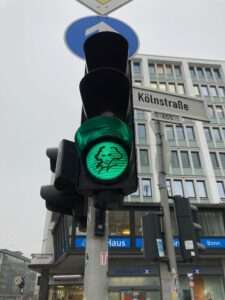
Some traffic lights also show that Beethoven was born in this city when they turn green.
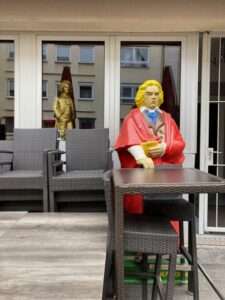
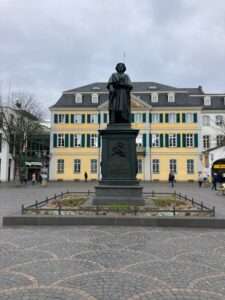
If you walk through the city with your eyes open, you will not only find the large Beethoven statue on Münsterplatz, but also many Beethoven figures by Ottmar Hörl (in gold, green, purple, or blue), which were created to mark the 250th anniversary of Beethoven’s birth and show the young, smiling Beethoven. (Beethoven Model 2019| Work | Ottmar Hörl). Beethoven looks down on passers-by not only from shop windows, but also from balconies and canopies.
Sometimes you can even find homemade Beethoven figures: one example sits in the shop window of the Maas fashion store opposite the Beethoven House.
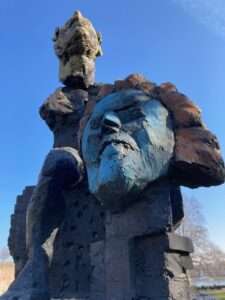 Further Beethoven artworks can be found in the Rheinaue or in the Stadtgarten. Here, Markus Lüpertz has depicted Beethoven as a sick man.
Not every work of art is recognizable as a Beethoven monument at 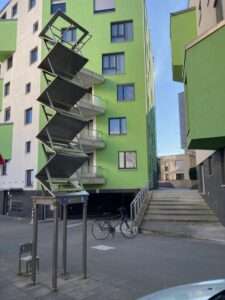 first glance: sculptor Yukako Ando has erected a desk in Rheingasse (the place where Beethoven was rescued from the second floor during the highest flood ever recorded in 1784) whose work surface rises like an accordion and merges into an open window. From this window, Beethoven had a view of the Rhine, the Beuel side, and the Siebengebirge mountains. A bird sits as a symbol of freedom.
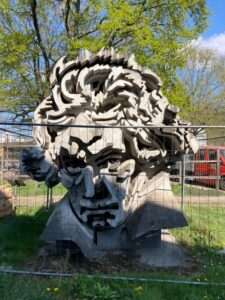 In front of the Beethovenhalle stands Beethoven by Klaus Kammerichs – an extraordinary bust made of concrete.
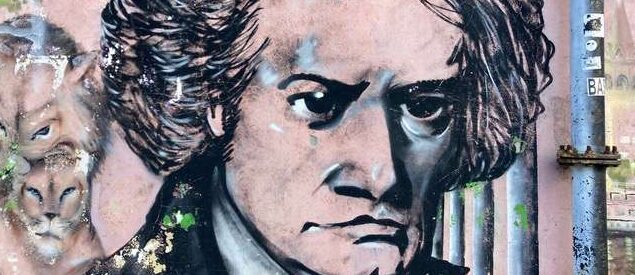
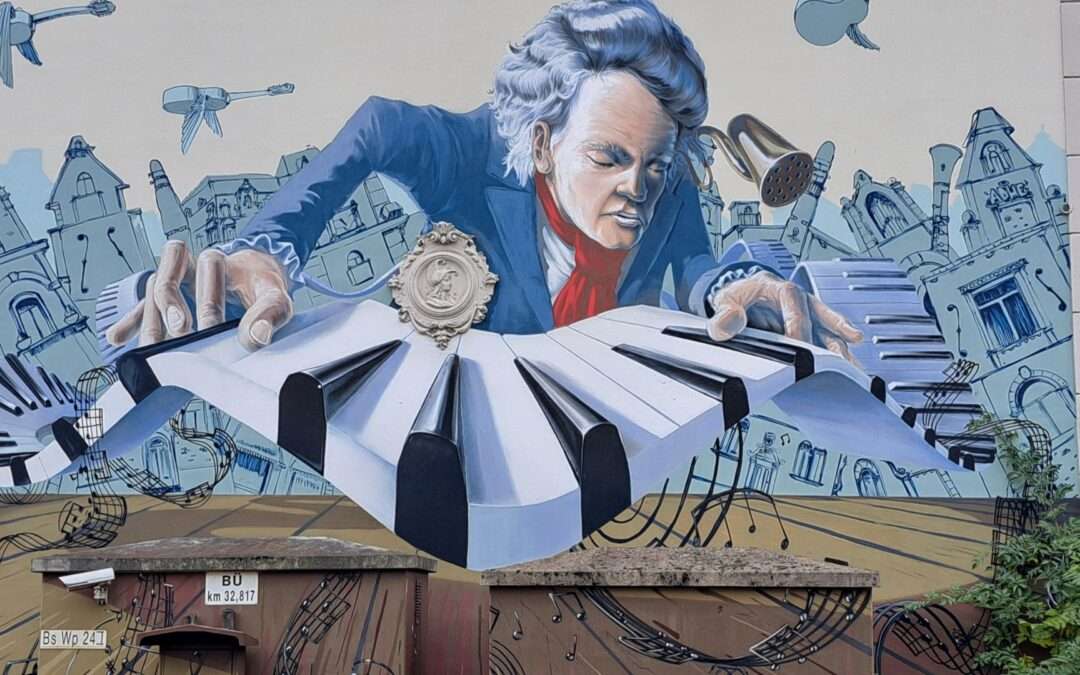
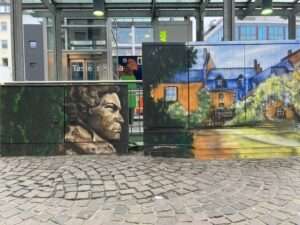
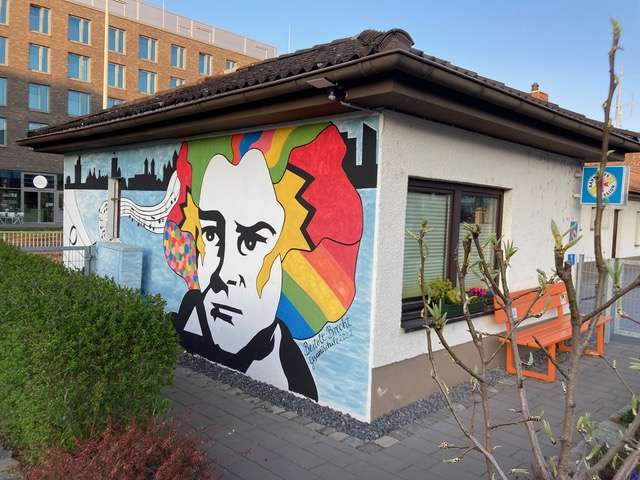
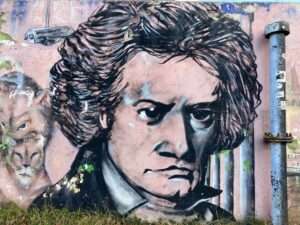
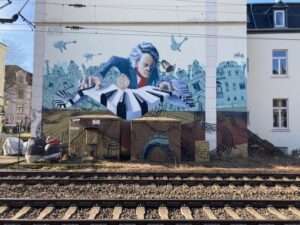
The great composer can also be seen on walls and electrical boxes: the wall of the railway station mission is decorated with Beethoven. Another mural can be viewed above the railway tracks at the corner of Kaiserstraße and Weberstraße. There are even two large murals in the Beuel district (Anniversary year: Street art in Bonn honors Beethoven – meikemeilen -).


Recent Comments